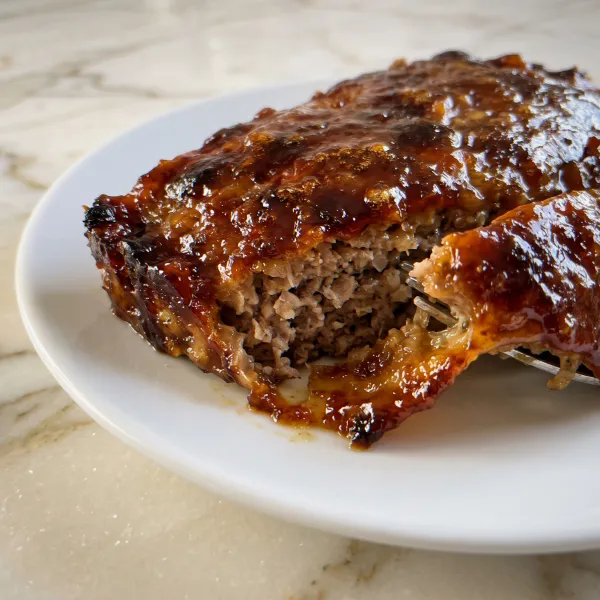
Oven Roasted Frozen Turkey answers the last-minute question, “can i cook a frozen turkey,” with a straightforward oven method. A 12-pound bird roasts with vegetable oil, garlic, thyme, and chicken broth; a thermometer tells you when it is ready. The result is browned skin and tender slices without a separate thawing day.
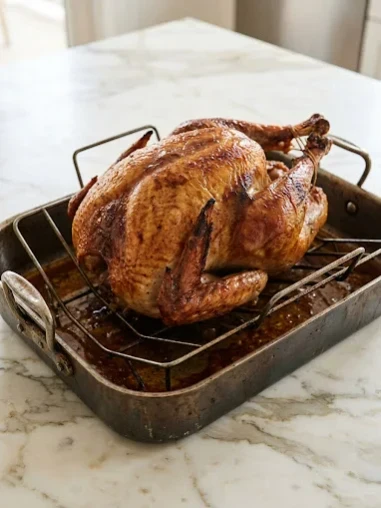
What to Expect from This Oven Roasted Frozen Turkey
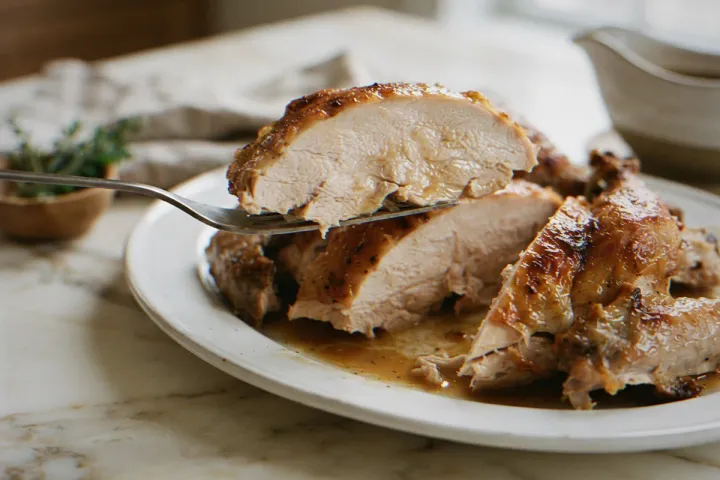
Expect a savory turkey with lightly crisp skin and meat that slices cleanly after resting. Chicken broth keeps the pan drippings from scorching while the bird heats through. Because the breast and thighs cook at different rates, check both before removing the turkey from the oven.
The seasoning is familiar and mild: thyme and garlic add aroma, while salt and pepper bring out the turkey’s flavor. This roast has no crumb structure; its texture comes from cooked muscle and rendered skin. Thin breast slices stay especially tender when carved across the grain and served with pan juices.
Ingredients for Oven Roasted Frozen Turkey
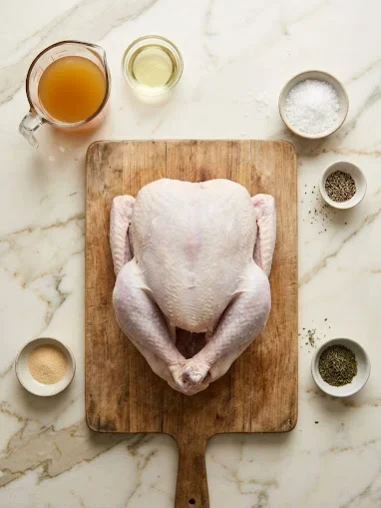
Use one unstuffed, 12-pound frozen turkey, three tablespoons vegetable oil, two teaspoons kosher salt, and one teaspoon each black pepper, garlic powder, and dried thyme. Add two cups chicken broth to the pan. Check the package for a gravy packet or giblets, and remove them as soon as they loosen during roasting.
How to Make Oven Roasted Frozen Turkey
Prepare the Pan and Turkey
Heat the oven to 325°F and set a sturdy metal rack in a large roasting pan. Remove every piece of outer plastic wrapping. If the neck or giblet bag comes out easily, remove it now; if either is frozen in place, leave it until the cavity warms enough to release it.
Do not rinse the turkey: water can spread raw poultry juices around the sink, and roasting will cook the surface. Pat away loose ice and surface moisture with paper towels. Set the bird breast side up on the rack, leaving space around it for heat to circulate.
Season and Start Roasting
Rub the exposed skin with vegetable oil, then scatter the salt, pepper, garlic powder, and thyme evenly over it. Some seasoning may slide off the frozen surface; you can redistribute it later as the skin warms. Pour the chicken broth into the pan beneath the rack.
Cover the pan tightly with heavy-duty foil and roast for three hours. Check the cavity during cooking and carefully remove the neck and giblet bag with tongs as soon as they loosen. Do not leave a bag inside through the full roast, especially if its material is unknown.
Brown, Check, and Rest
After three hours, lift off the foil carefully to avoid the steam. Roast uncovered for another two to three hours, checking the temperature in the thickest breast, innermost thigh, and innermost wing. Keep the thermometer tip away from bone, which can give a misleading reading.
Remove the turkey only when all three spots reach at least 165°F. Transfer it to a cutting board and rest it uncovered for 30 minutes before carving. If the skin darkens too quickly while the center is still cooking, loosely cover the browned areas with foil.
Can I Cook a Frozen Turkey at 325°F?
Yes. If you are asking “can i cook a frozen turkey” without thawing it first, keep the oven at 325°F throughout. For a 12-pound frozen turkey, allow roughly five to six hours, though oven performance and the bird’s shape affect timing. Treat that range as a planning guide, not a doneness test.
Begin temperature checks near the end of the estimated cooking time, and continue roasting if any required spot is below 165°F. Clear juices and browned skin cannot confirm doneness. The covered stage protects the surface while the center warms; uncovering lets the skin brown and excess moisture evaporate.
Serving Ideas
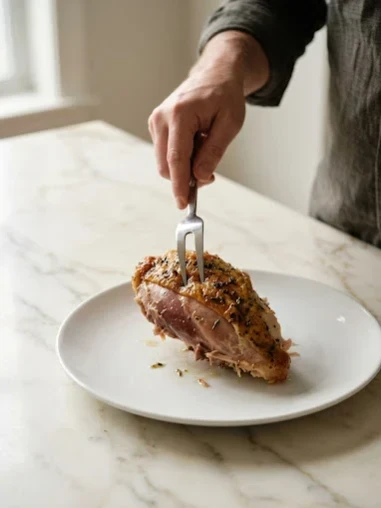
Carve the breast into thin slices and serve the thigh meat in larger pieces. Spoon defatted pan juices over each portion, or use them as the base for gravy. For a vegetable side, pair the turkey with Macrobiotic Baked Pineapple and Squash.
Set the carved turkey on a warm platter so guests can choose white or dark meat. Keep extra juices nearby for anyone who wants them. If you are planning a casual meal, Classic Banana Bread makes a simple dessert you can prepare before the oven is needed for the roast.
Storage
Remove leftover meat from the bones and refrigerate it in shallow, covered containers within two hours of serving. Keep the refrigerator at 40°F or colder and use the turkey within three to four days. Store pan juices separately, then reheat leftovers until they reach 165°F.
For longer storage, freeze carved turkey in airtight containers or freezer bags with a little cooled pan juice to limit drying. Label each package with the date and use it within three to four months for best quality. Thaw frozen leftovers in the refrigerator before reheating.
Helpful Troubleshooting
- Skin browns early: Loosely cover the dark areas with foil while the center continues cooking.
- Giblet bag is stuck: Check again after the cavity warms; lift it out with tongs.
- Pan dries out: Add a small splash of broth beneath the rack.
- One spot reads low: Keep roasting and check the breast, thigh, and wing again.
- Meat seems dry: Slice it thinly and serve with warm pan juices.
More Recipes to Try Next
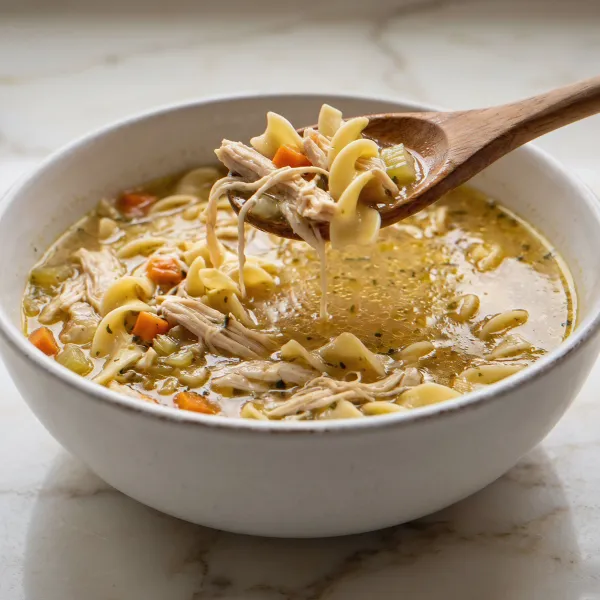
Use leftover turkey in place of chicken in Classic Chicken Noodle Soup or Classic Chicken Noodle Casserole. For another straightforward poultry dinner on a different night, try Juicy Air Fryer Chicken Breast.
Frequently Asked Questions
Can you roast a turkey straight from frozen?
Yes. Remove the outer packaging, place the unstuffed turkey in a roasting pan, and cook it in an oven set to at least 325°F. Remove the neck and giblet packet as soon as the cavity loosens enough to do so safely. Use a thermometer to check for doneness.
How long does a 12-pound frozen turkey take to roast?
Plan for roughly 4½ to 6 hours at 325°F, but treat that range as a planning estimate. Oven performance and the bird’s shape affect cooking time. Start checking before the expected finish, and continue roasting until the breast, innermost thigh, and innermost wing each reach 165°F.
When should you season a frozen turkey?
Brush the turkey with vegetable oil and add the salt, pepper, garlic powder, and thyme once the surface has thawed enough for the seasonings to stick. Pour the chicken broth into the roasting pan. If the skin browns too quickly, loosely cover it with foil while the turkey finishes cooking.