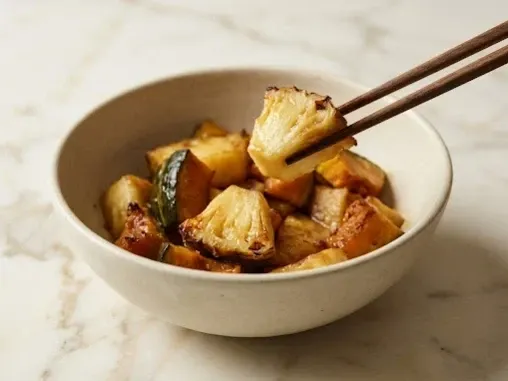
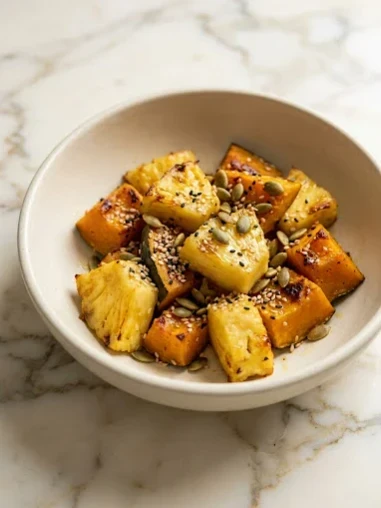
Macrobiotic Baked Pineapple and Squash pairs tender kabocha with warm, juicy pineapple for a sweet and savory side dish. This macrobiotic pineapple recipe uses dark sesame oil, brown rice syrup, pumpkin seeds, and toasted sesame seeds to give the roasted fruit and squash rich flavor and a little crunch.
What to Expect from This Macrobiotic Pineapple Recipe
Kabocha becomes soft and dense in the oven, while its edges develop light browning. Pineapple stays juicy and releases some of its liquid onto the pan. Spread the pieces apart so they roast evenly; a crowded pan traps steam and leaves the squash wet instead of gently caramelized.
Dark sesame oil adds a savory, nutty note that balances the pineapple’s acidity. Brown rice syrup lightly coats the pieces without making them sticky. Pumpkin seeds bring a firm bite, and toasted sesame seeds add a finer crunch just before serving. The finished dish is sweet, salty, and warm.
Ingredients for Macrobiotic Baked Pineapple and Squash
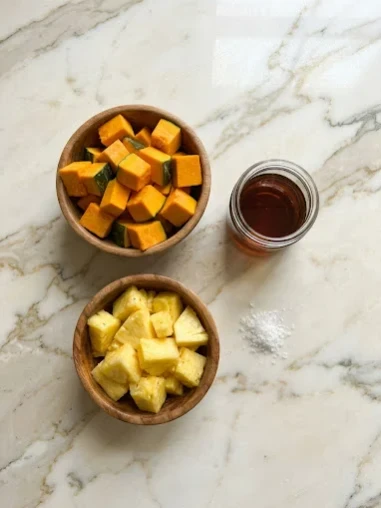
Choose a small kabocha that feels heavy for its size and a pineapple with a fragrant base. Cut the squash into similar cubes so they finish together. Fresh pineapple holds its shape during baking. Measure the dark sesame oil and brown rice syrup before tossing so every piece gets a light coating.
How to Make Macrobiotic Baked Pineapple and Squash
Prepare the Squash and Pineapple
Heat the oven to 375°F and line a large baking sheet with unbleached parchment paper. Seed the kabocha and cut it into bite-size cubes. Peel and core the pineapple, then cut it into chunks close to the squash cubes in size. Place both in a large mixing bowl.
Kabocha skin is edible after roasting, so you can leave it on if it is clean and unblemished. Use a sturdy knife and steady cutting board, since the raw squash is firm. Keep the pineapple chunks substantial enough to remain juicy through the full baking time.
Coat and Arrange the Pieces
Drizzle the squash and pineapple with two tablespoons of dark sesame oil and one tablespoon of brown rice syrup. Add the sea salt, then toss gently until the pieces look evenly coated. The syrup is thick, so take a moment to turn the pieces at the bottom of the bowl.
Spread everything across the prepared sheet in a single layer, leaving a little space between pieces. If the pan is too small, use two baking sheets. Let any excess liquid stay in the bowl; pouring it onto the pan can make the squash steam and slow browning.
Bake and Finish
Bake for about 30 minutes, until a fork slides easily into the squash. During the last eight minutes, scatter the raw pumpkin seeds over the pan so they toast lightly. Watch the seeds near the end, especially where they touch the parchment rather than the squash.
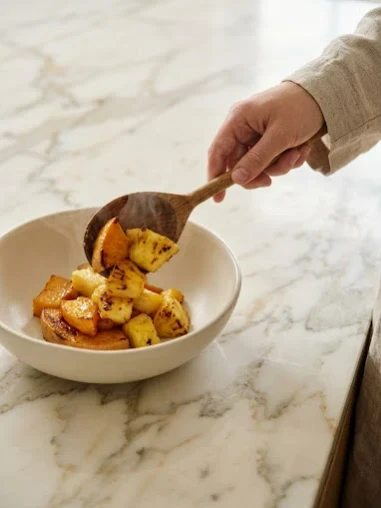
Remove the baking sheet from the oven and let the mixture stand for five minutes. This short rest makes the hot pineapple easier to serve and lets the juices settle. Divide among small ceramic bowls, spooning over any pan juices, and finish with toasted sesame seeds.
Bake at 375°F Until the Squash Is Tender
Ovens and cube sizes vary, so use tenderness as the main doneness cue. Pierce a thick squash piece with a fork; it should offer little resistance while still holding its shape. If it feels firm after 30 minutes, bake for another five minutes and check again.
For this macrobiotic pineapple recipe, light browning is enough. Dark sesame oil and syrup can color the edges before the squash is cooked through, so check the center rather than judging by color alone. If the pumpkin seeds brown early, lift them off the pan while the squash finishes.
Serving Ideas
Serve the squash warm in small bowls as a sweet and savory squash side dish. Its rich coating pairs well with plain brown rice and simply cooked greens, which give the meal a quieter base. Spoon a little of the pineapple juice from the pan over each portion.
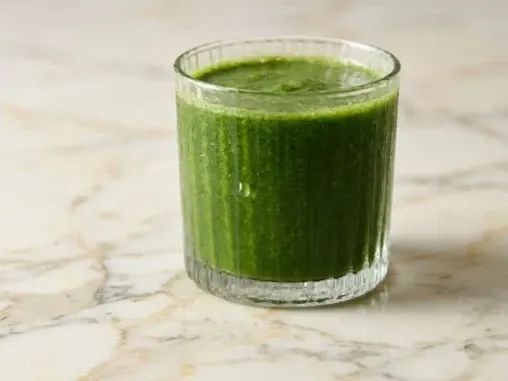
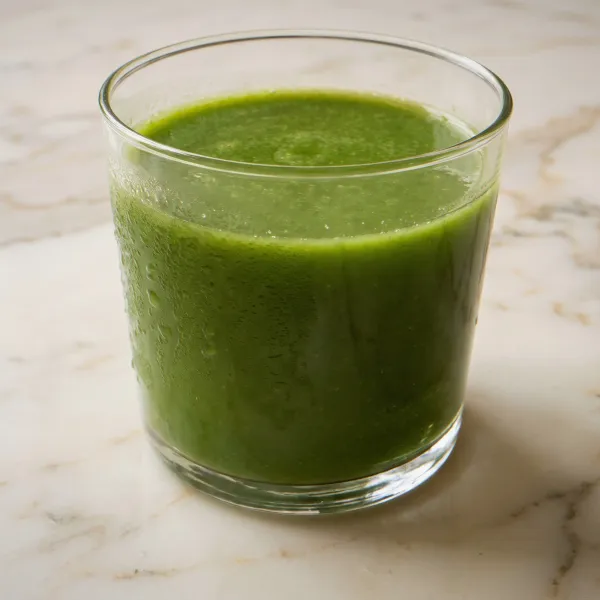
For a meal with more pineapple, offer small portions of Pineapple Chia Seed Pudding afterward. A Pineapple Chia Smoothie works better alongside a lighter serving of squash. Both use pineapple differently, so choose one based on whether you want a spoonable dessert or a drink.
Storage
Cool leftovers promptly, then transfer them to a covered container and refrigerate for up to three days. Store the sesame seeds separately if you want them to keep their crunch. Reheat the squash and pineapple on a baking sheet at 350°F until hot, then add the seeds.
For longer storage, freeze cooled portions in airtight containers for up to two months. Thaw overnight in the refrigerator before reheating. The pineapple will soften and release more liquid after freezing, so spread the mixture on a baking sheet and drain off excess moisture if needed.
Helpful Troubleshooting
- Squash is firm: Cut smaller cubes next time; bake the current batch in five-minute increments.
- Pan is watery: Leave more space between pieces and use a second sheet.
- Edges are dark: Check tenderness, then lower the oven rack for the remaining time.
- Seeds taste bitter: Add them later in the bake and remove any that brown early.
More Recipes to Try Next
Use leftover fresh pineapple in a Pineapple Chia Cleanse Drink. If you want another simple baked recipe for the week, try Classic Banana Bread; it uses a familiar fruit in a very different way.
Frequently Asked Questions
Do you need to peel kabocha squash before baking it?
No. Kabocha skin is edible and softens as the squash bakes, so you can leave it on after washing the squash well. Cut the squash into evenly sized cubes so the skin and flesh cook at the same rate.
How do you keep pineapple and squash from getting soggy in the oven?
Spread the squash and pineapple in a single layer on a large baking sheet, leaving space between pieces. Excess moisture can escape when the pan is not crowded. Bake until the squash is tender and the pineapple edges begin to brown.
When should you add pumpkin and sesame seeds?
Add the pumpkin seeds near the end of baking so they become lightly toasted without burning. Sprinkle the already toasted sesame seeds over the dish after it comes out of the oven. This keeps both toppings crisp and makes their flavor stand out.