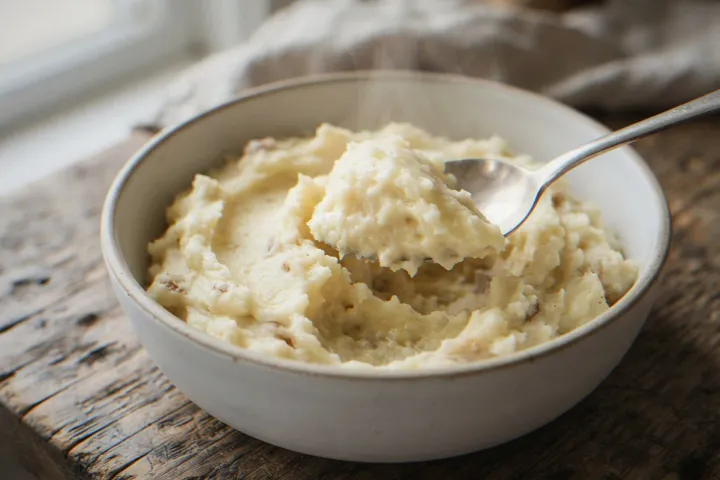
Classic Homemade Mashed Potatoes from Russet Potatoes turn tender potatoes into a fluffy, creamy side dish with softened butter, warm milk, and cream cheese. These mashed potatoes from russet potatoes have enough body to hold a spoonful of gravy while staying smooth enough to serve alongside a weeknight dinner.
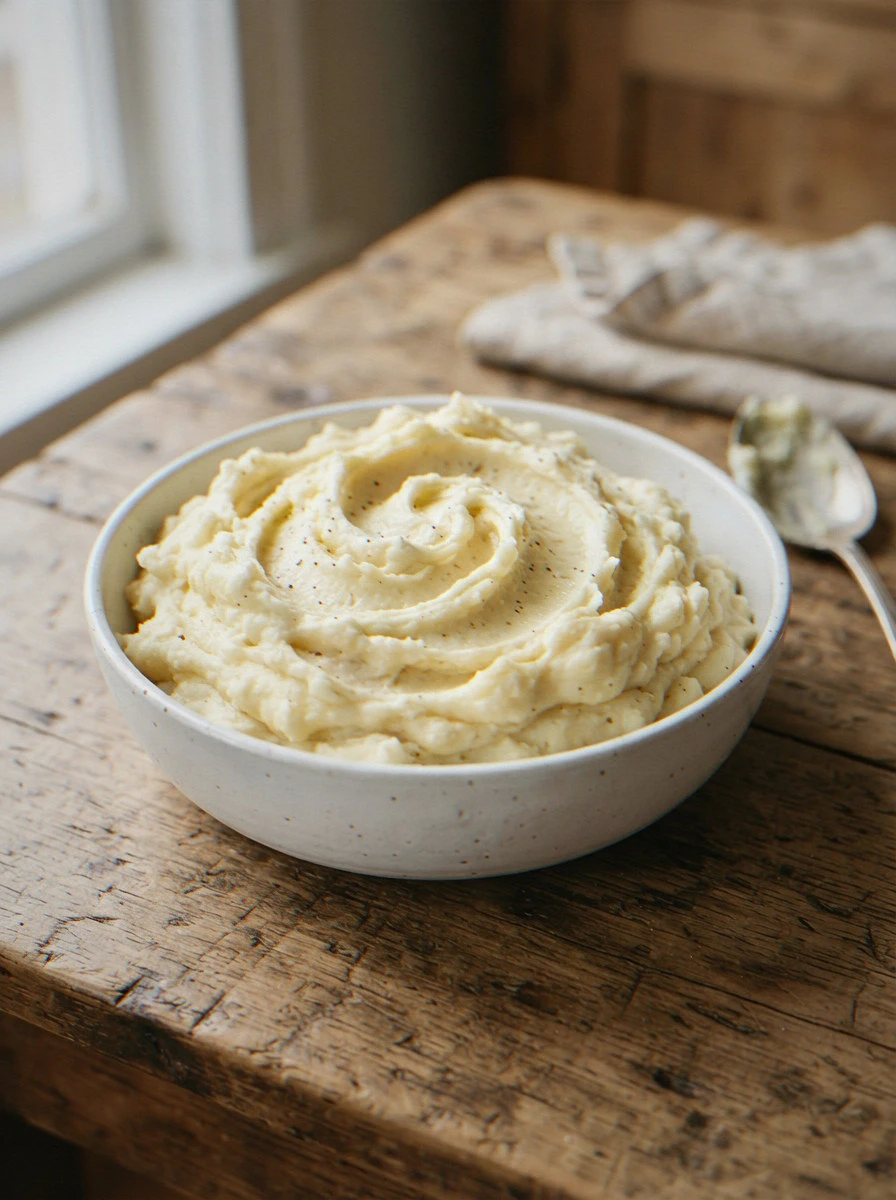
What to Expect from This Classic Homemade Mashed Potatoes from Russet Potatoes
Russets break apart readily after simmering, giving the mash a light, soft structure rather than dense, waxy pieces. A potato masher leaves a little texture, while brief mixing at low speed makes the potatoes smoother. Either way, draining and drying them first keeps excess water out of the bowl.
Butter adds richness, whole milk loosens the mash, and cream cheese gives it a mild tang. Garlic powder and black pepper season the potatoes without covering their flavor. The result is buttery mashed potatoes that taste balanced on their own and still work well with a savory main dish.
Ingredients for Classic Homemade Mashed Potatoes from Russet Potatoes
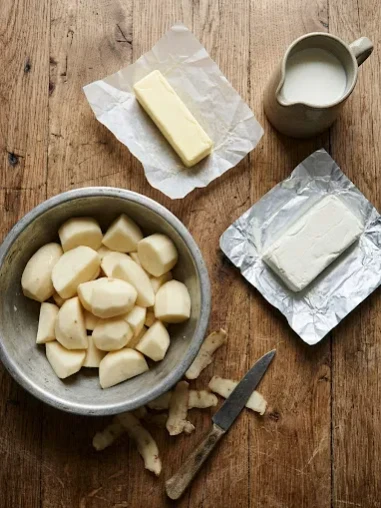
Cut the three pounds of peeled russets into even, two-inch chunks so they finish cooking together. Use one tablespoon of kosher salt in the boiling water, then season the finished mash separately to taste. Have the butter and cream cheese softened and the whole milk warm before draining the potatoes.
How to Make Classic Homemade Mashed Potatoes from Russet Potatoes
Start in Cold Water
Put the potato chunks in a large pot and cover them with cold water by at least one inch. Add the tablespoon of kosher salt, bring the water to a boil over high heat, then lower the heat until it simmers gently. Starting cold helps the centers cook through evenly.
Simmer for 15 to 20 minutes, checking a large piece near the end of the cooking time. A fork should pass through its center easily. Drain the potatoes thoroughly in a colander, then return them to the warm pot for two minutes so surface moisture can evaporate.
Warm the Milk and Mash
Warm the whole milk in a small saucepan over low heat for about two minutes; it should feel warm without boiling. Mash the drained potatoes while they are still hot, breaking up the larger pieces before adding the dairy. This gives the butter, milk, and cream cheese room to spread evenly.
Add the softened butter, warm milk, cream cheese, garlic powder, black pepper, and the remaining kosher salt. Stir with a wooden spoon until combined. For a smoother finish, use a hand mixer on low speed for about 30 seconds, stopping as soon as the mixture looks creamy.
Season and Serve
Taste before transferring the potatoes to a ceramic serving bowl. Add a little more salt if the flavor seems flat, and fold it in gently. Serve immediately while warm. Mashed potatoes from russet potatoes firm up as they cool, so give them a brief stir before serving if they have been sitting.
Simmer Until Fork-Tender
Keep the water at a gentle simmer once it reaches a boil. A hard boil can break the outside of each chunk down before its center is tender. Begin testing at 15 minutes; the fork should slide in without resistance, and the potato should separate easily when pressed.
After draining, look for steam rising from the potatoes in the warm pot. If water remains at the bottom, let them sit another minute before mashing. Add the dairy while the potatoes are warm, then mix only until combined. Extended beating can make a fluffy russet potato mash sticky.
Serving Ideas
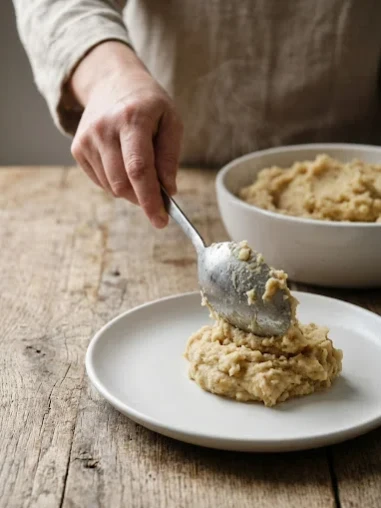
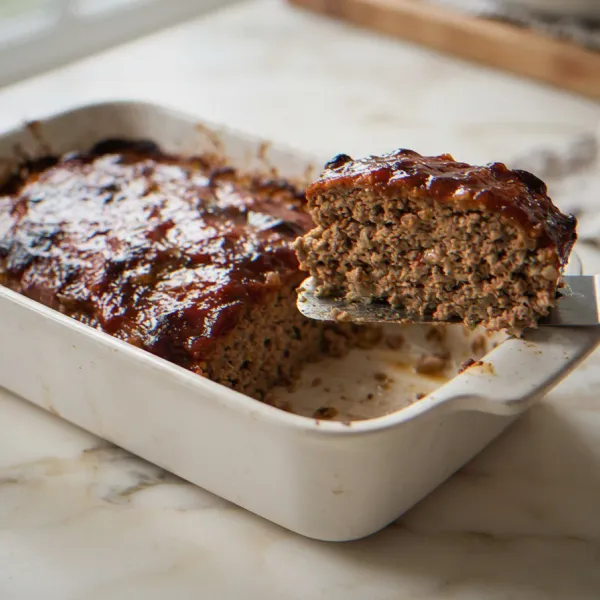
Serve the potatoes beside Classic Beef Stuffed Peppers, or spoon them onto plates with a slice of meatloaf and Classic Meatloaf Sauce. Their mild flavor also makes them a useful side when the main dish has a strongly seasoned sauce.
For a larger dinner, pair them with Classic Herb Bread Stuffing and a vegetable such as green beans or roasted carrots. Set out a warm serving spoon and keep the bowl covered until mealtime so the surface does not cool and stiffen.
Storage
Let leftover mashed potatoes cool, then transfer them to an airtight container and refrigerate for up to four days. Reheat gently in a covered saucepan or the microwave, stirring occasionally. Add a small splash of milk if needed to restore their creamy texture, and heat them until thoroughly hot.
For longer storage, portion the cooled potatoes into freezer-safe containers and freeze for up to two months. Thaw overnight in the refrigerator before reheating. Stir in a little warm milk as they heat; the cream cheese and butter help mashed potatoes from russet potatoes regain a smooth consistency.
Helpful Troubleshooting
- Watery: Return drained potatoes to the warm pot and let more steam escape before mashing.
- Lumpy: Mash the potatoes thoroughly while hot, before adding butter, milk, and cream cheese.
- Sticky: Stop mixing once smooth; prolonged beating releases more starch.
- Too thick: Stir in warm milk, one tablespoon at a time.
- Underseasoned: Add a small pinch of salt, stir, and taste again.
More Recipes to Try Next
For another approach to this familiar side, see Classic Homemade Mashed Potatoes. To plan the rest of a comforting meal, add Classic Chicken Noodle Casserole to your list.
Frequently Asked Questions
Why are russet potatoes good for mashed potatoes?
Russets have a high starch content, so they break down easily and produce a light, fluffy mash. Cook the chunks until they are fully tender, then drain them well. Their mild flavor also gives the butter, cream cheese, and seasonings room to shine.
How do I keep russet mashed potatoes from getting gummy?
Drain the cooked potatoes thoroughly and let excess moisture steam off before mashing. Use a potato masher or ricer, then gently fold in the softened butter, cream cheese, and warm milk. Avoid a blender or food processor, which can overwork the starch and create a gluey texture.
Should I warm the milk before adding it to mashed potatoes?
Yes. Warm milk blends into the hot potatoes more easily and helps keep the finished mash hot. Add it gradually while stirring gently, stopping when the potatoes reach your preferred consistency. The softened butter and cream cheese will make them richer and creamier.